Monad (MON)
What is Monad?
Here are 5 key points about Monad (MON):
- Monad is designed for high throughput, with a stated target of 10,000 transactions per second, 400 ms block times, and 800 ms finality.
- Its parallel execution engine and just-in-time compilation can process independent transactions concurrently rather than executing every transaction one at a time.
- Asynchronous execution pipelines consensus and execution, giving the network more time to process transactions without holding up block production.
- MonadBFT provides Byzantine fault-tolerant consensus, while RaptorCast is designed to distribute blocks efficiently across the network.
- Monad is fully EVM bytecode and Ethereum JSON-RPC compatible; MON pays transaction fees and can be delegated to validators for staking rewards.
Learn more about Monad by reading the Gem Wallet Learn article: What Is The Monad Blockchain?
Monad Support in Gem Wallet
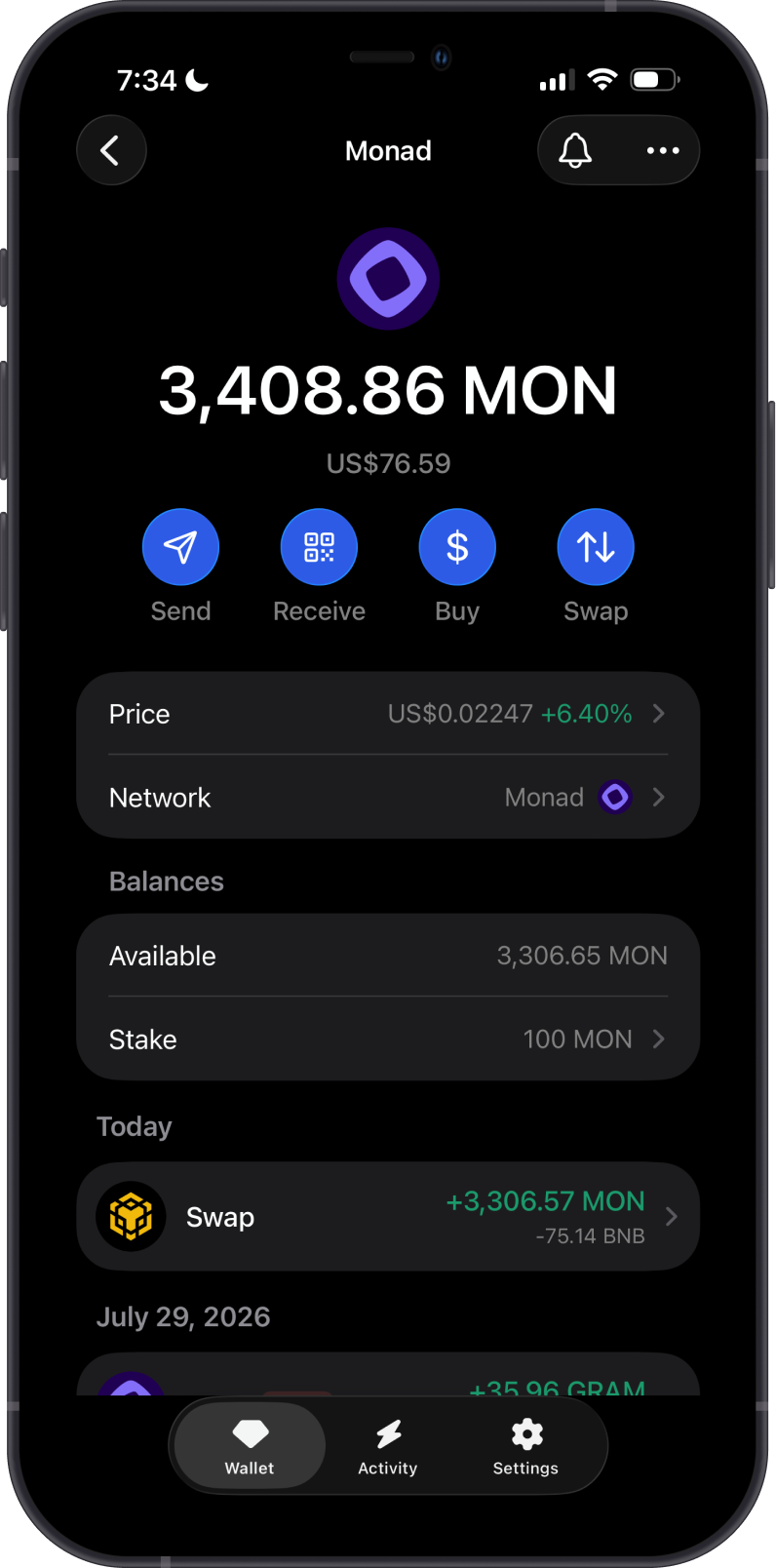
When you set up a new Multi-coin wallet, Gem Wallet creates a native Monad address for you.
Gem Wallet can be used to:
- Buy Monad (MON) with fiat through available third-party providers.
- Hold, send, and receive native MON and supported Monad ERC-20 tokens.
- Swap Monad to or from another supported cryptocurrency via Cross-Chain Swap.
- Swap MON and supported Monad ERC-20 tokens through available on-chain providers.
- Stake MON with a validator to earn staking rewards.
How to Add a Monad Wallet?
To activate your Monad wallet in Gem Wallet:
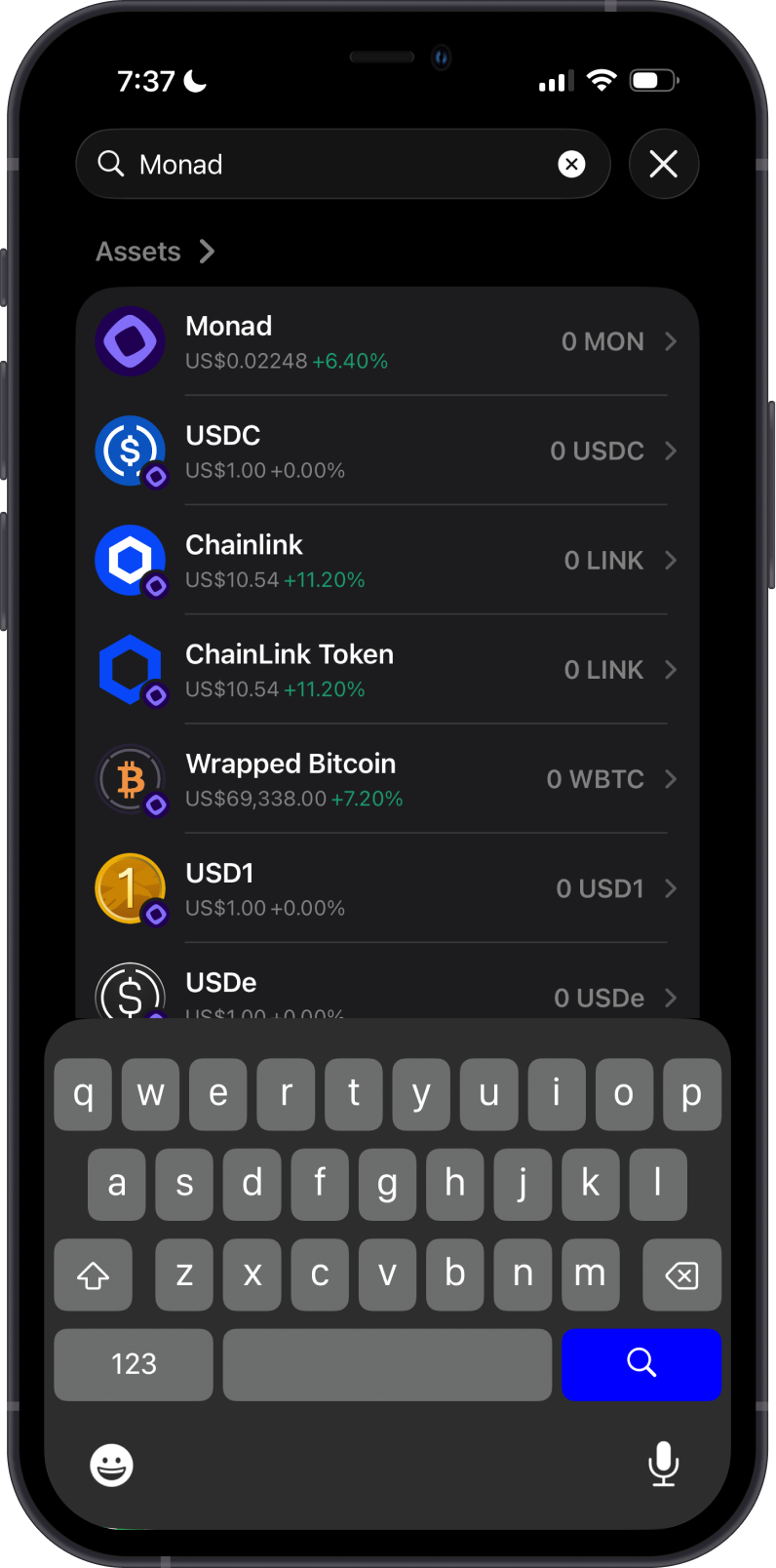
- Tap the magnifying glass in the upper-right corner.
- Search for “Monad” or “MON”.
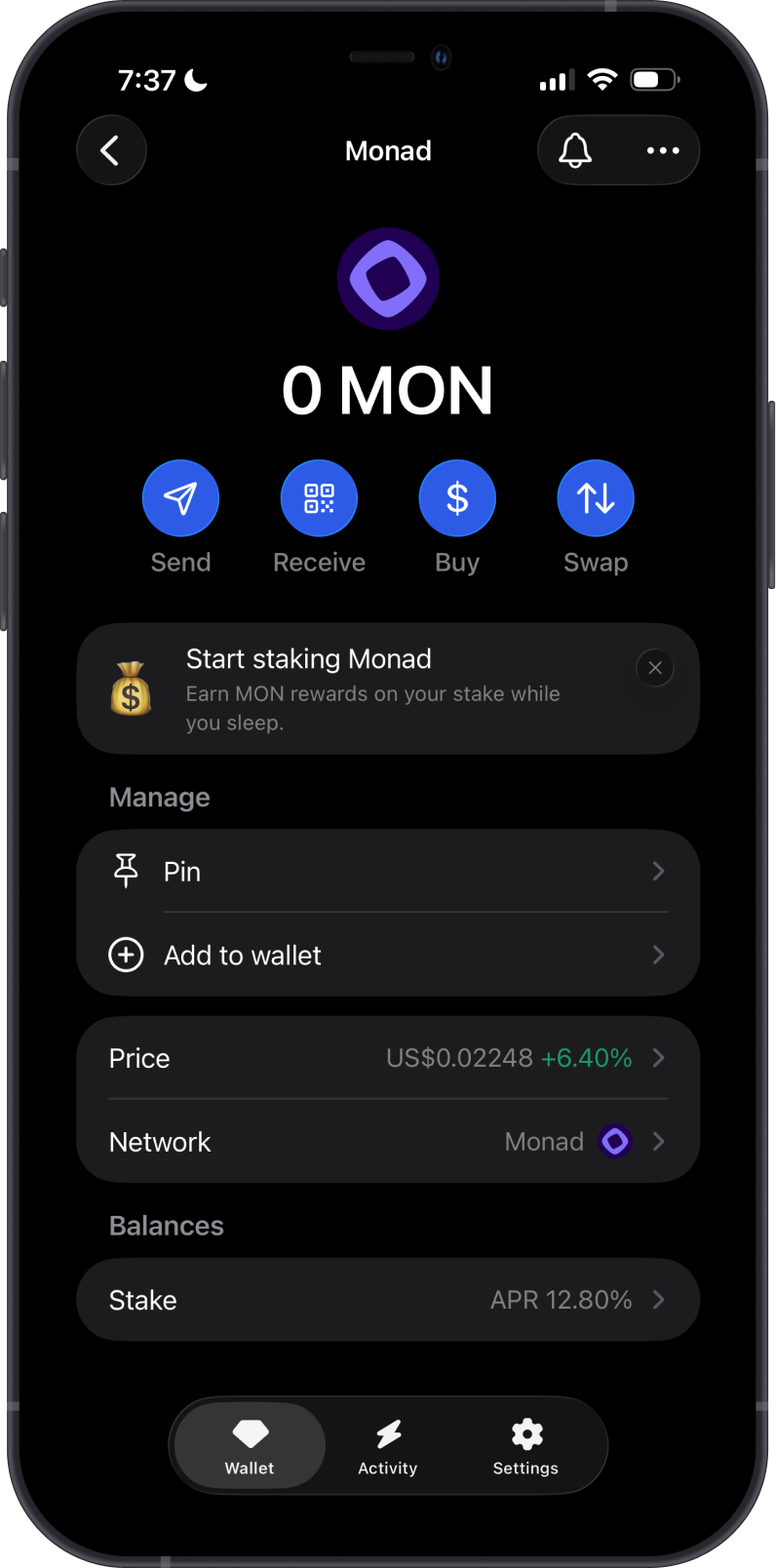
- Select the native Monad asset.
- Choose “Pin” to keep it easily accessible, or tap “Add to wallet” to enable it.
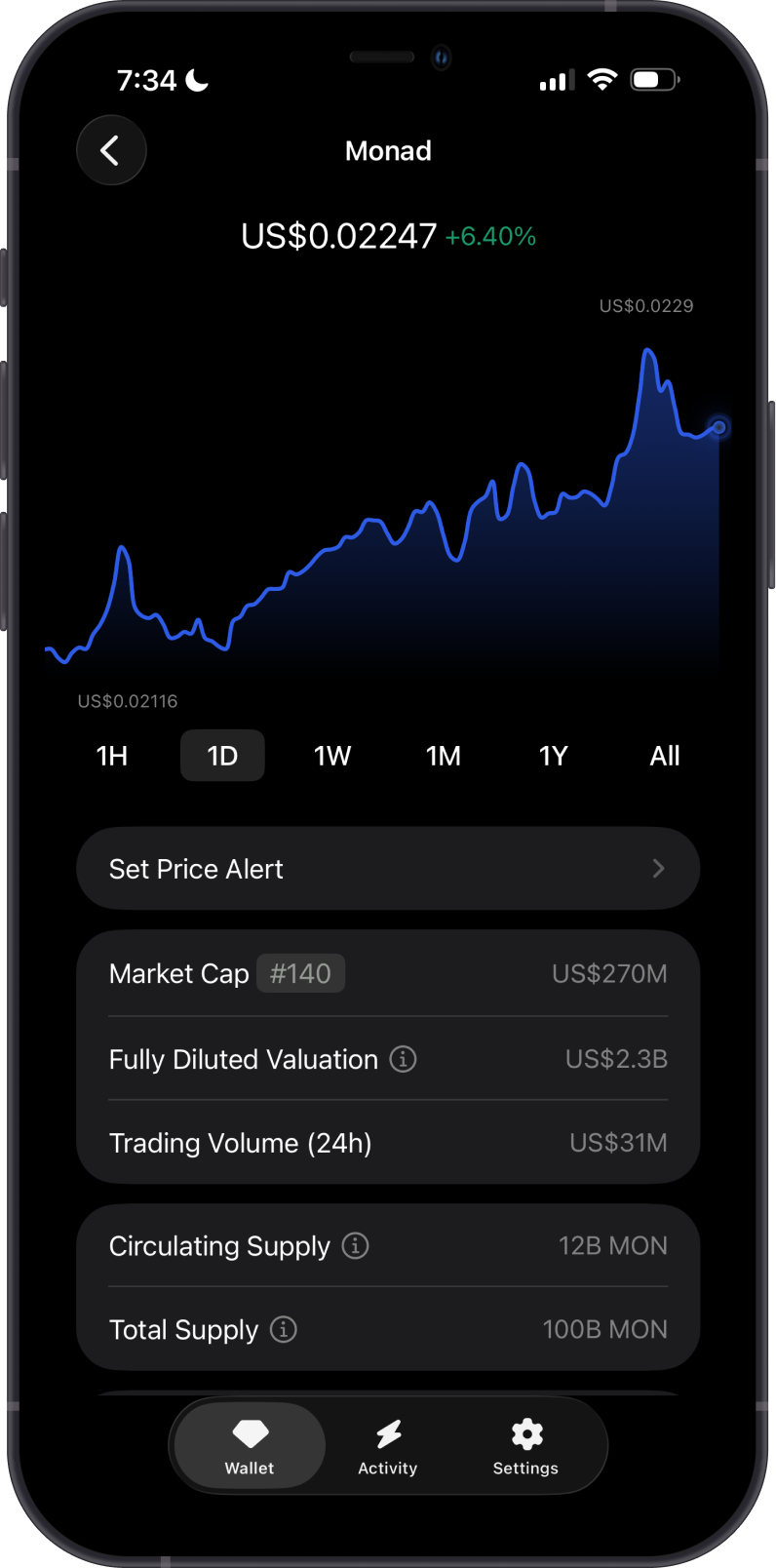
Your MON wallet will appear on the main wallet screen, ready for buying, sending, receiving, swapping, and staking.
How to Manage Monad Tokens?
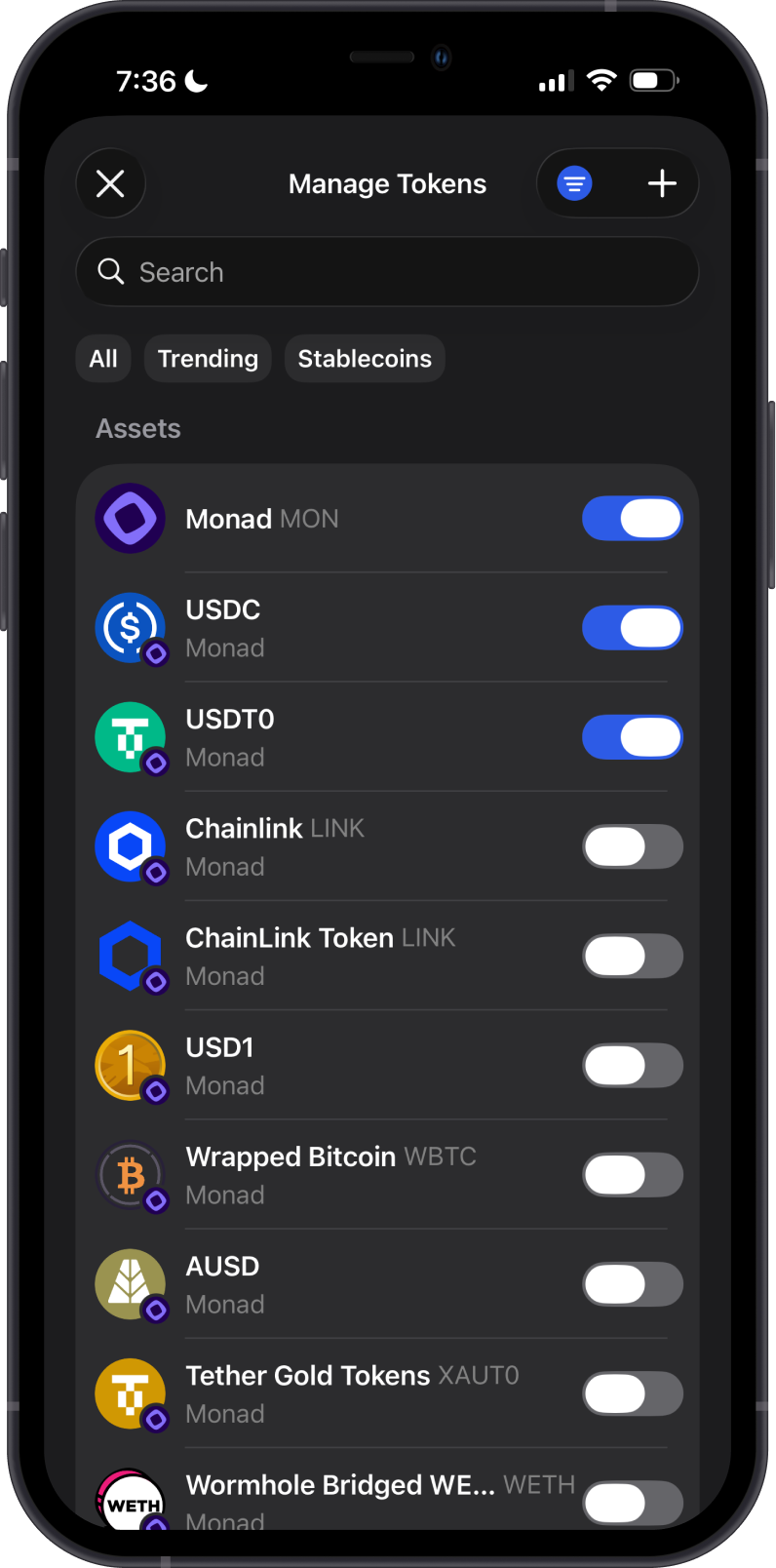
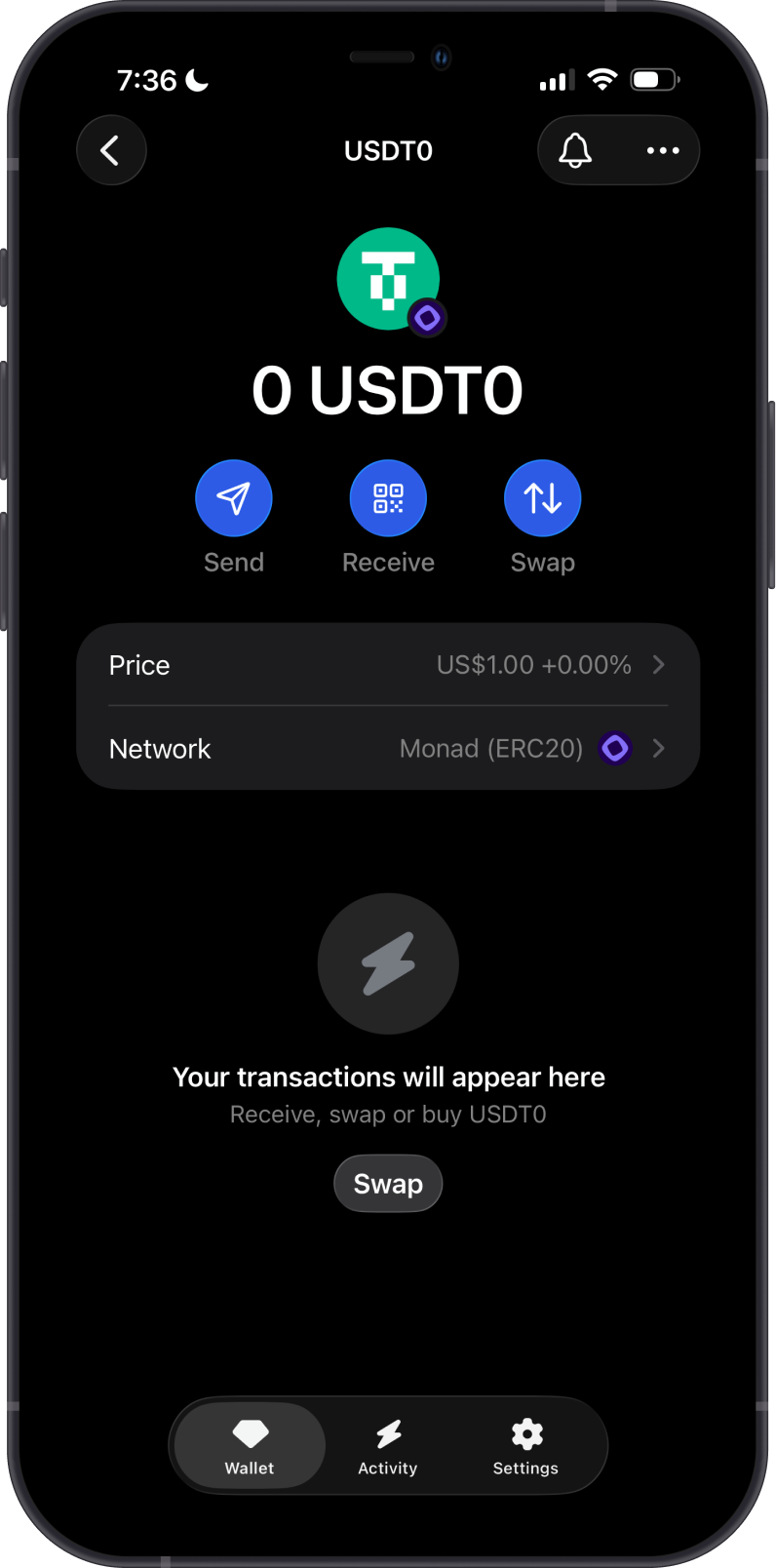
Gem Wallet can show supported ERC-20 tokens issued on the Monad network. Scroll to the bottom of the main wallet screen, then select Manage Tokens and search for the token manually. To narrow the results, tap the filter icon and set the network to Monad. Once enabled, the token appears as its own asset in your wallet, with its network shown as Monad (ERC20).
Native MON and Monad ERC-20 tokens use the same EVM address. Always check the selected token and network before receiving or sending funds.
How to Buy or Receive Monad with Gem Wallet?
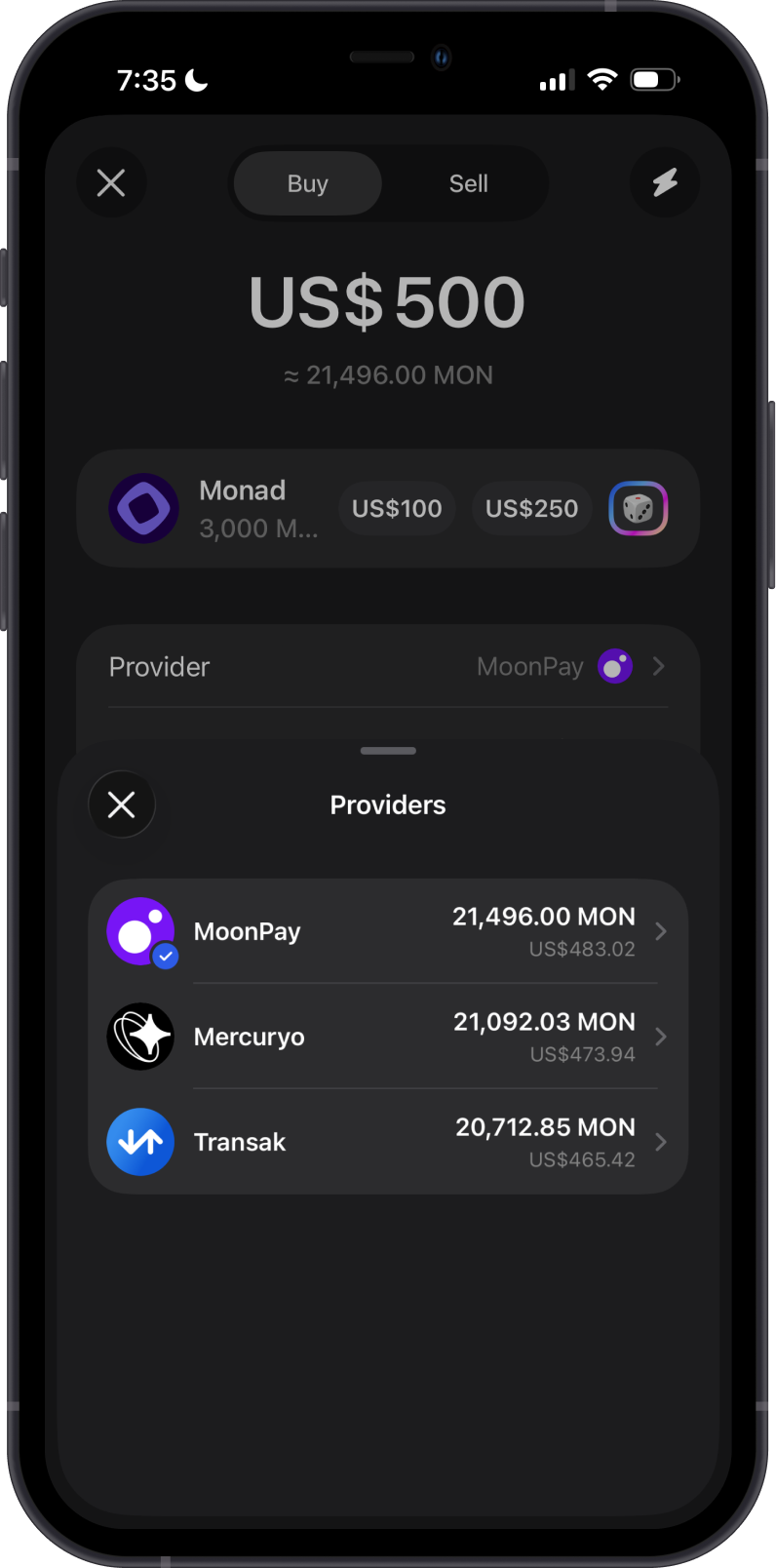
To buy MON, tap Buy from the Monad asset screen, enter the fiat amount, and select an available provider. Provider availability, supported payment methods, fees, and quoted amounts vary by provider and region.
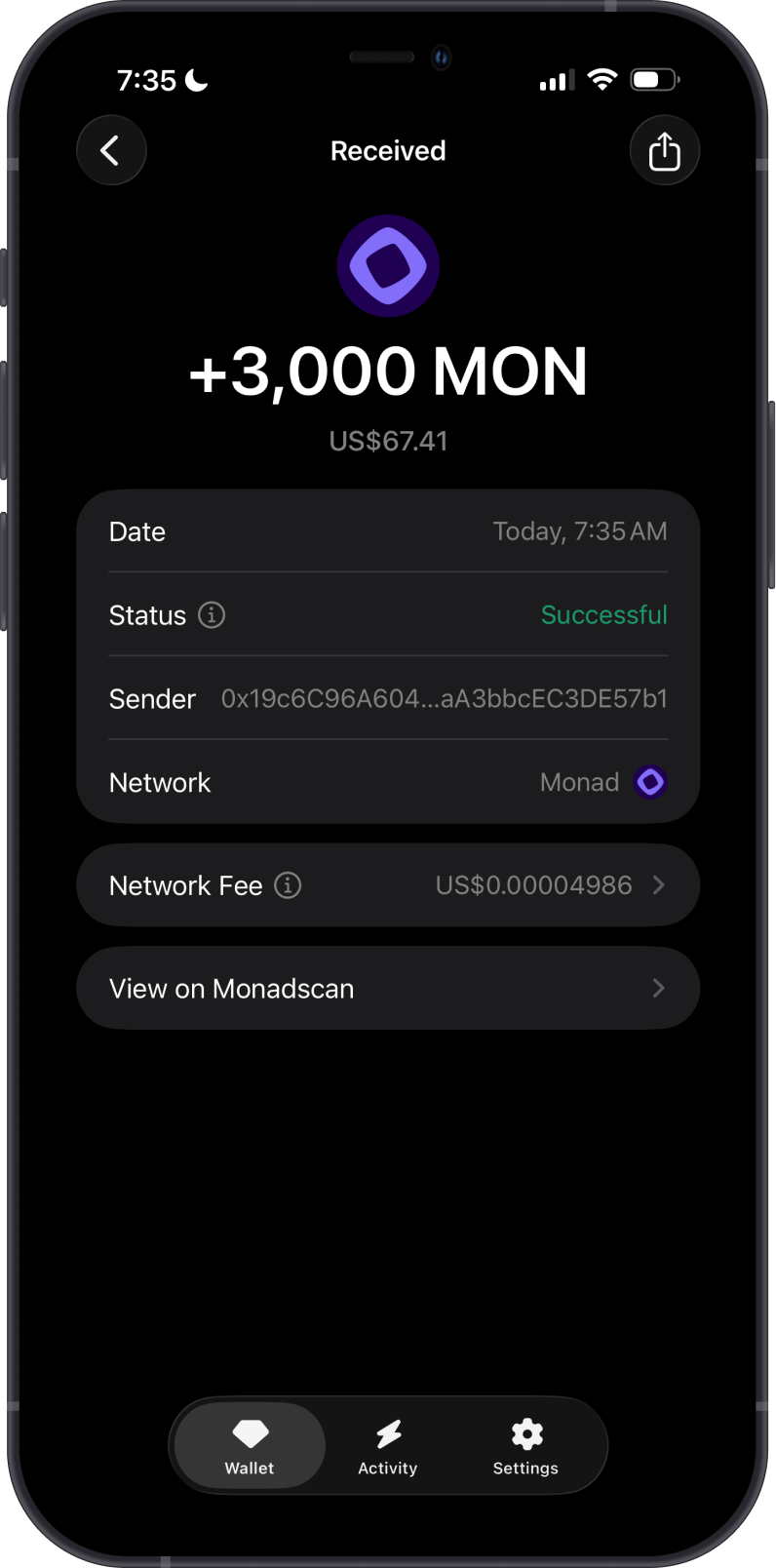
To receive MON, tap Receive and copy or share the Monad address shown in Gem Wallet. Send only MON on the Monad network to this address.
How to Send Monad with Gem Wallet?
Tap Send, then enter the recipient's Monad address manually, paste it, scan its QR code, or select one of your wallets. Enter the MON amount and tap Continue to review and confirm the transaction.
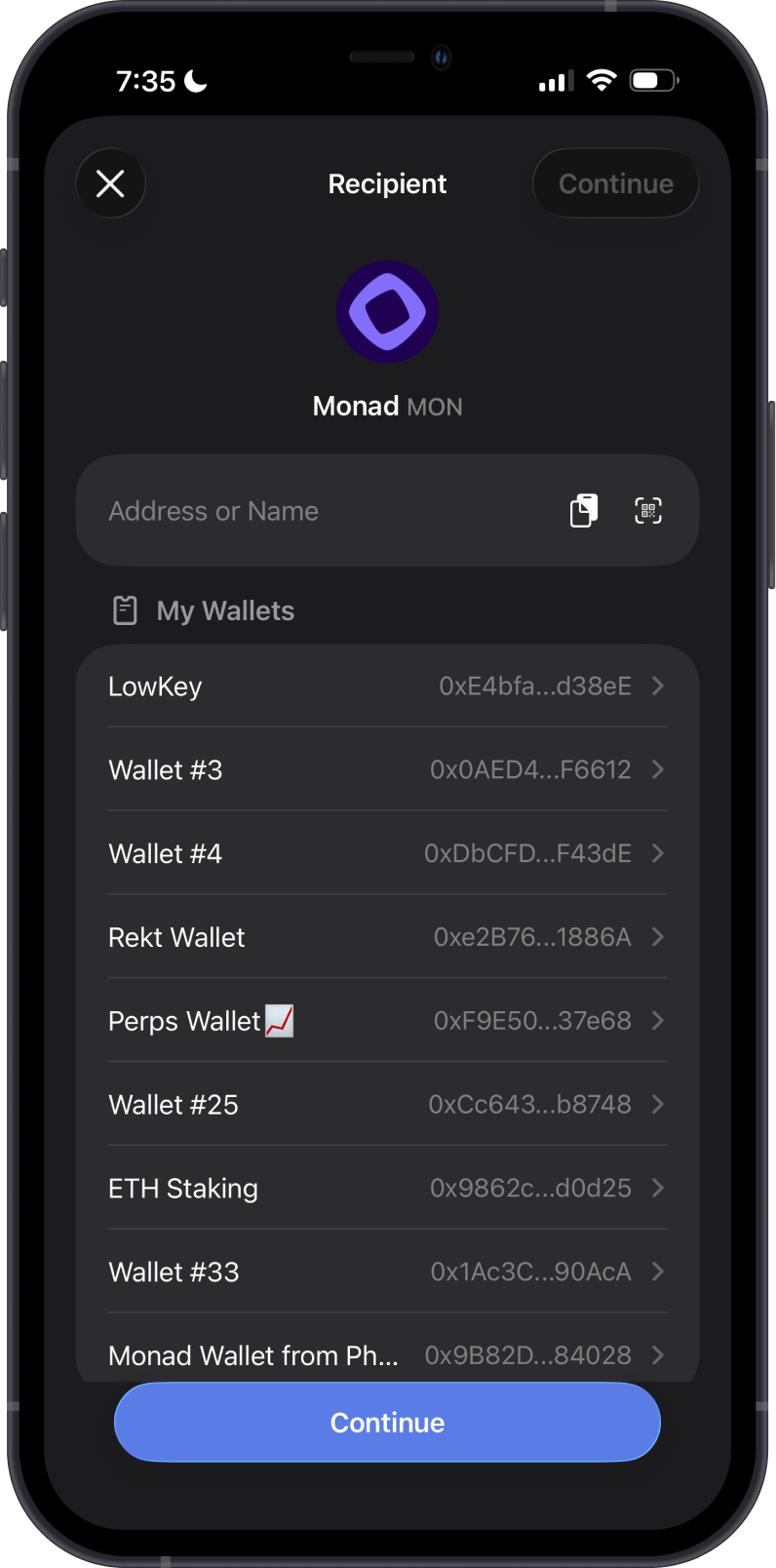
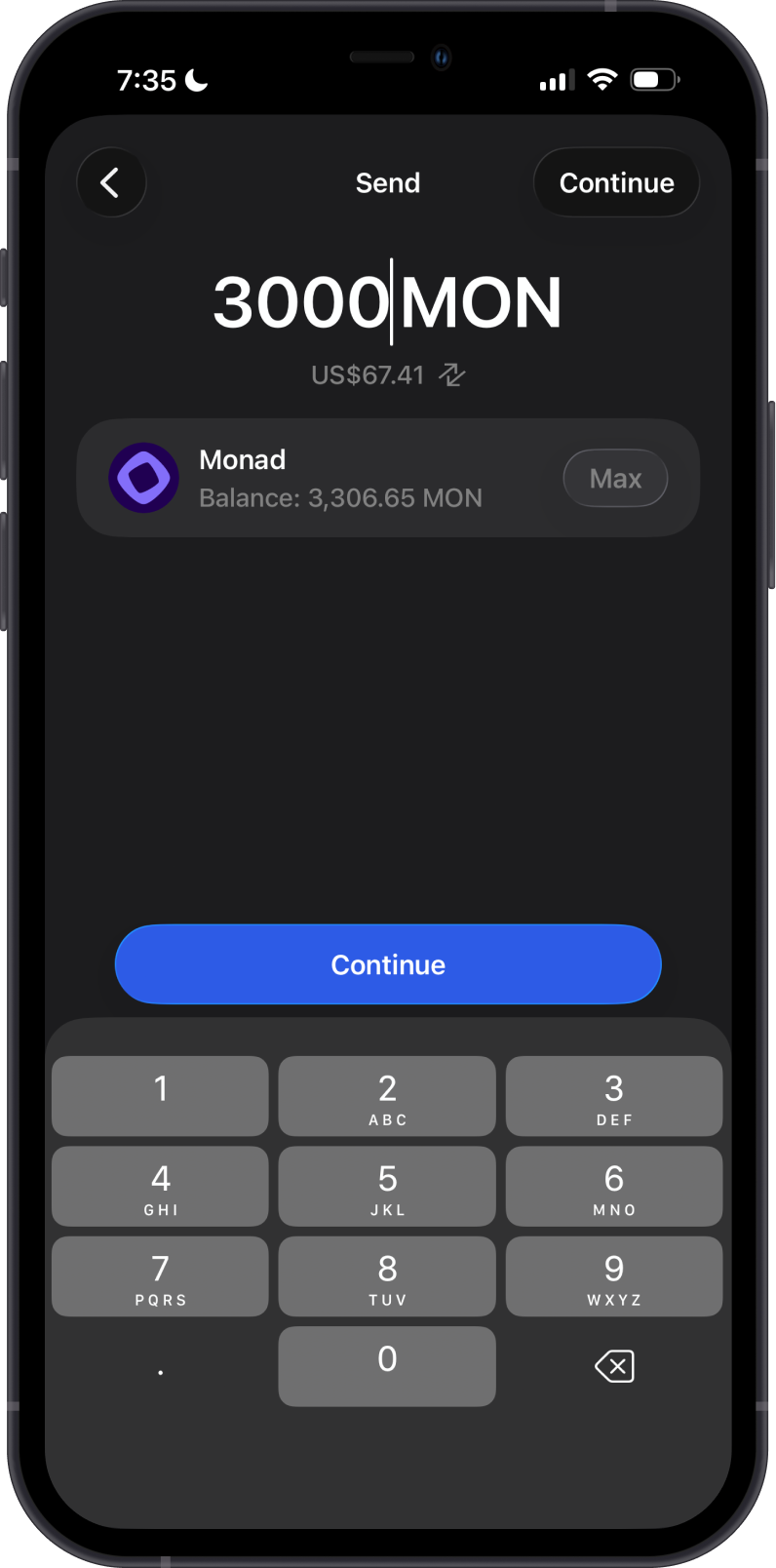
Keep enough MON in your wallet to cover the amount sent and the network fee. Always verify the recipient address and network before confirming because blockchain transactions cannot be reversed.
Can I Swap Monad on Gem Wallet?
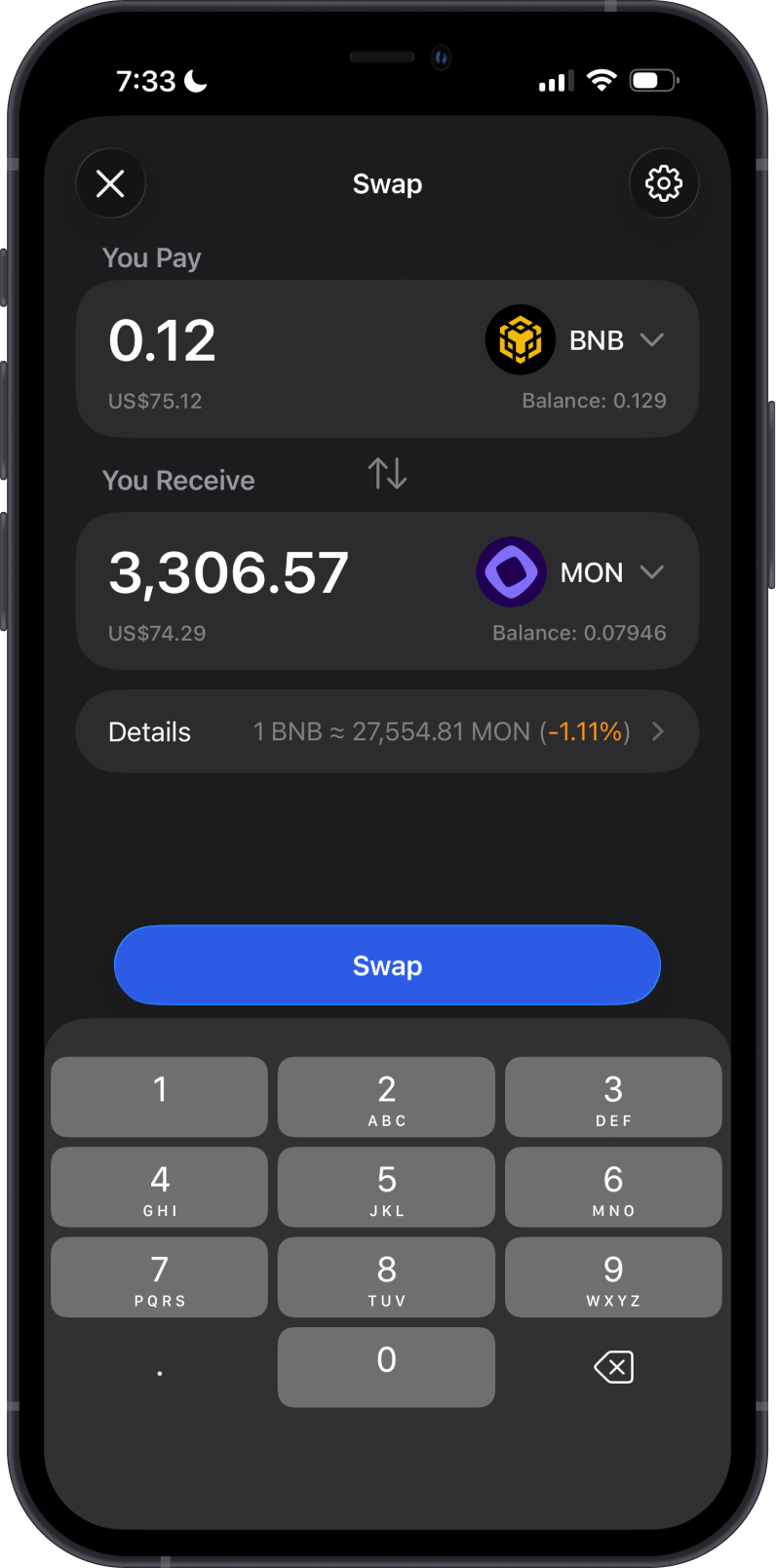
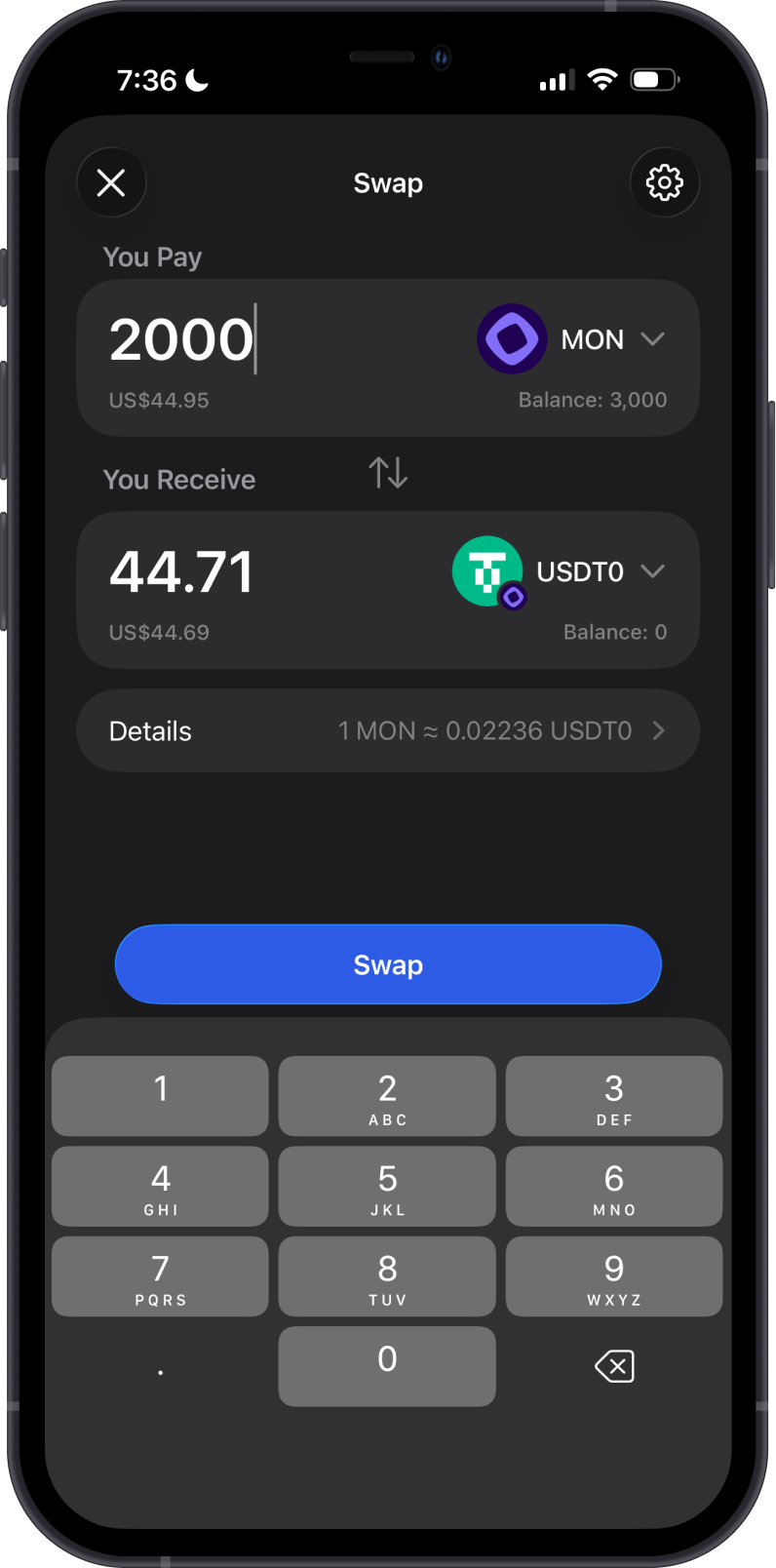
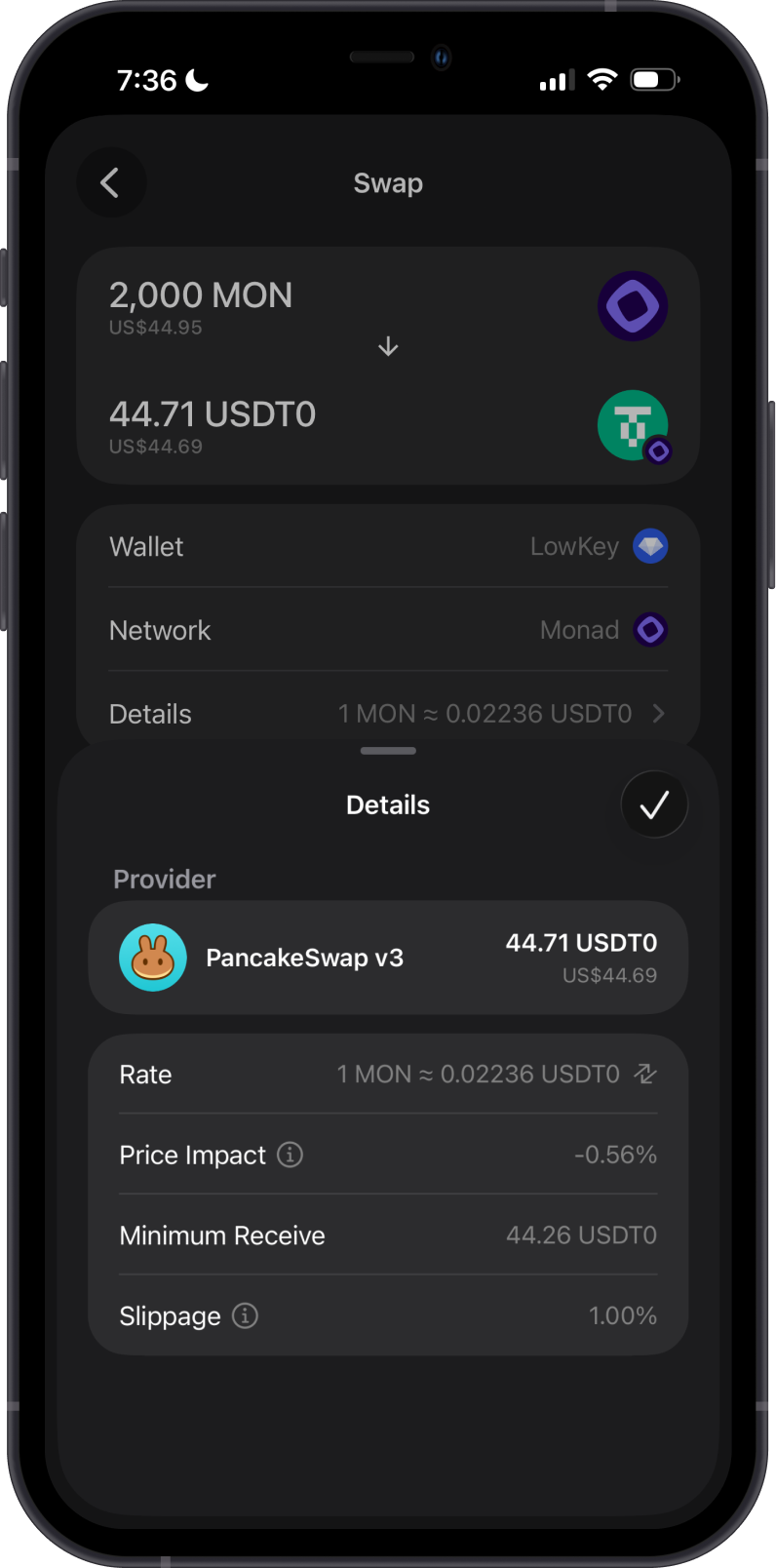
Gem Wallet displays swap quotes for routes supported by its available providers. Routes, providers, and quote details can vary by asset, amount, and market conditions.
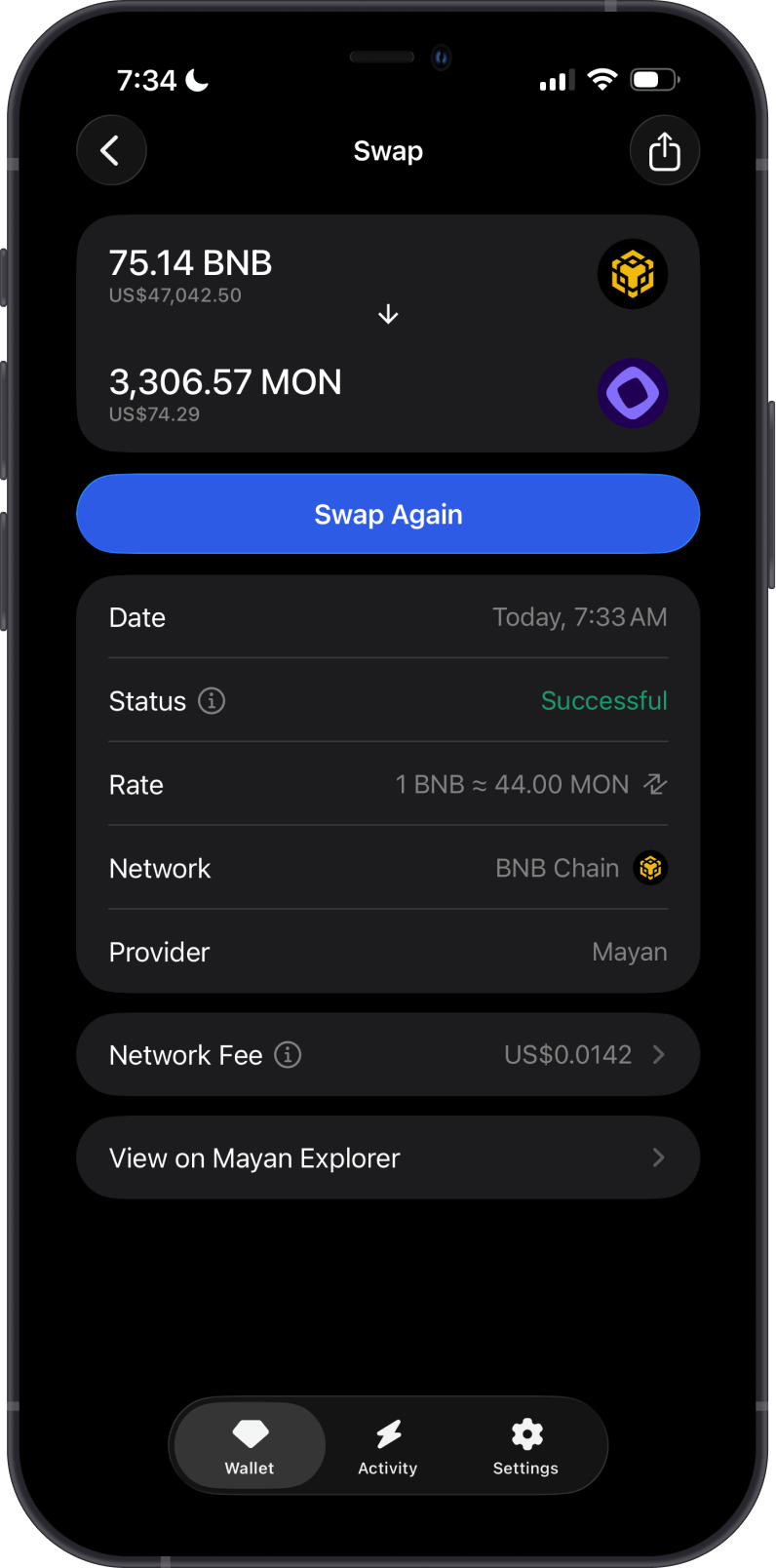
The first example shows a cross-chain swap from BNB to MON. The completed transaction displays the received amount, provider, network fee, and a link to the provider's explorer.
The second example shows an on-chain swap from MON to USDT0 on Monad, including the selected provider, rate, price impact, minimum received amount, and slippage before confirmation.
Can I Stake MON on Gem Wallet?
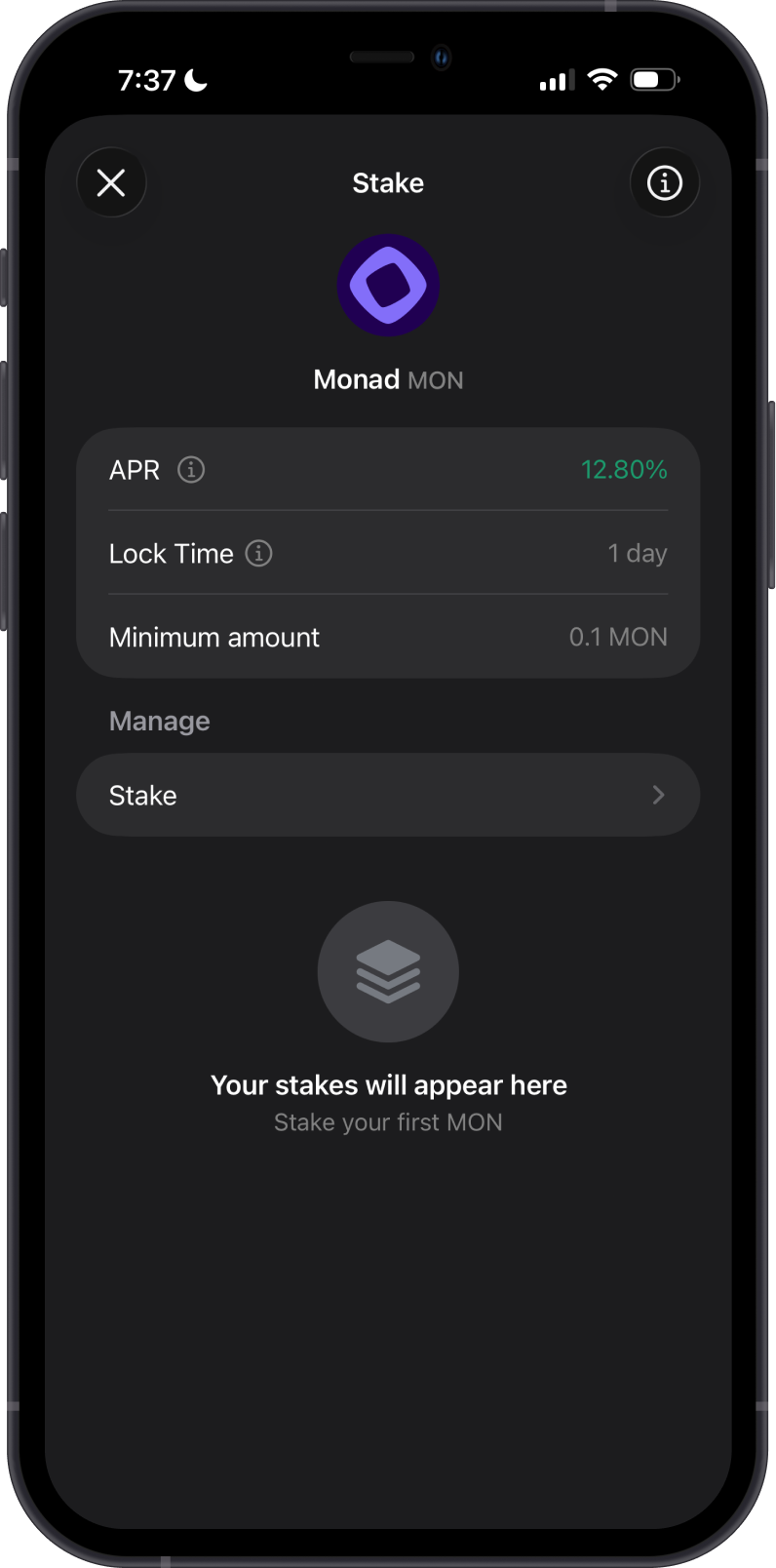
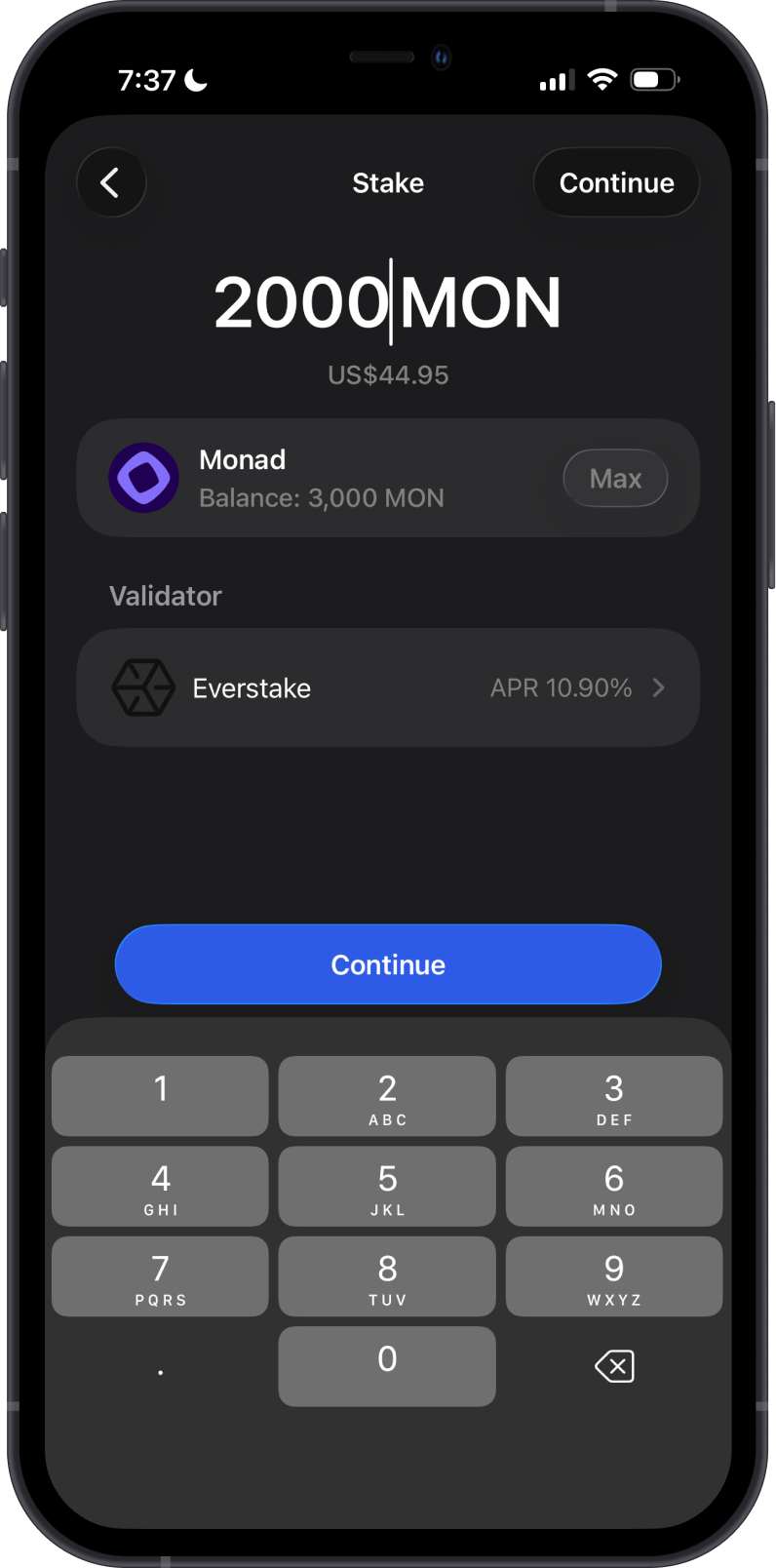
You can stake MON from the Monad asset screen by selecting Stake, choosing a validator, entering the amount, and confirming the delegation. The displayed APR is an estimate that can change and is reduced by the validator's commission.
Gem Wallet currently displays a 1-day lock time and a 0.1 MON minimum stake amount. Staking changes take effect according to Monad's epoch timing, and undelegated funds must complete the network withdrawal delay before they can be withdrawn. Keep a small amount of MON unstaked to pay for staking, unstaking, reward-claiming, and other transactions.
Transaction Fees on the Monad Blockchain
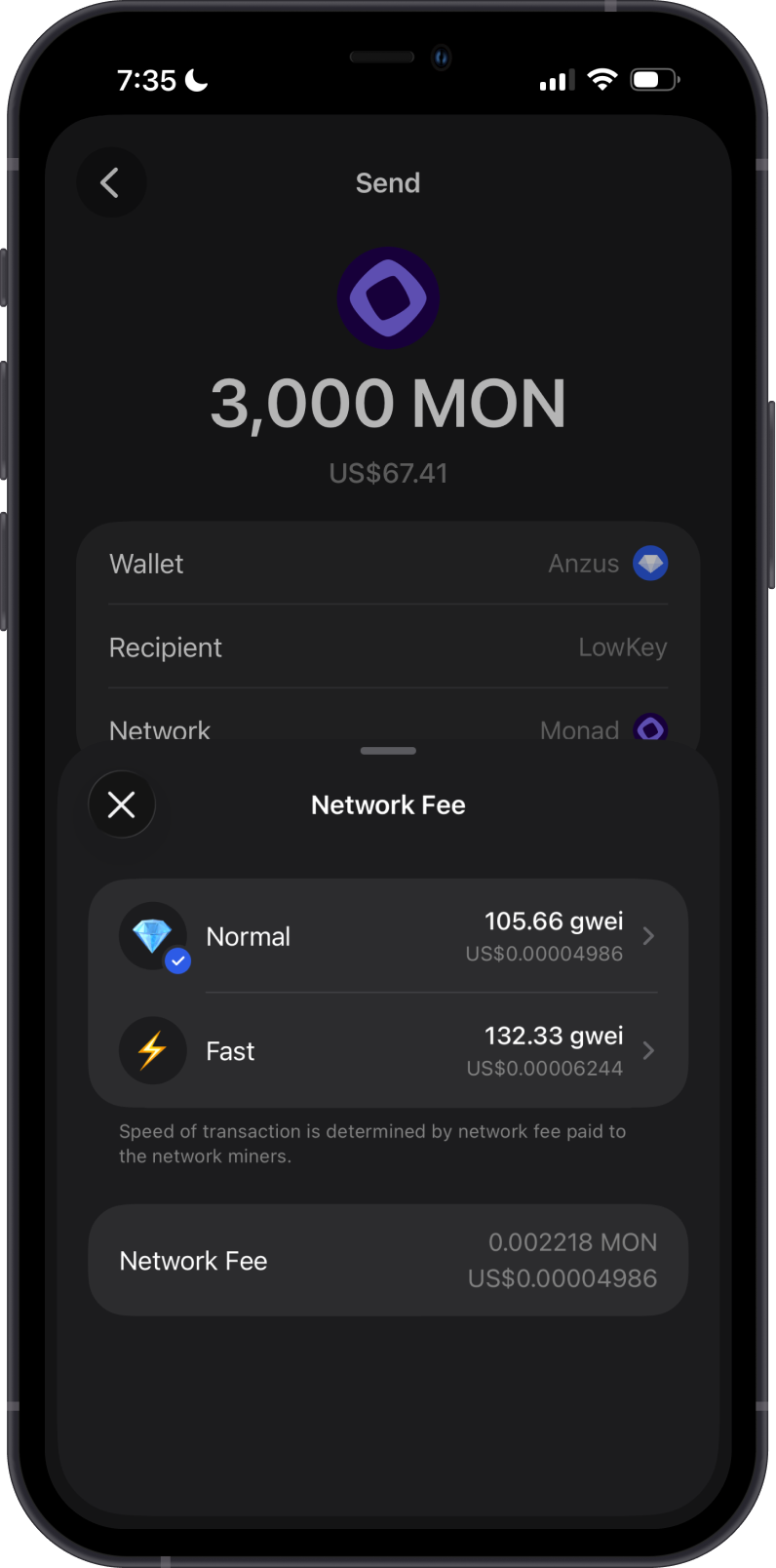
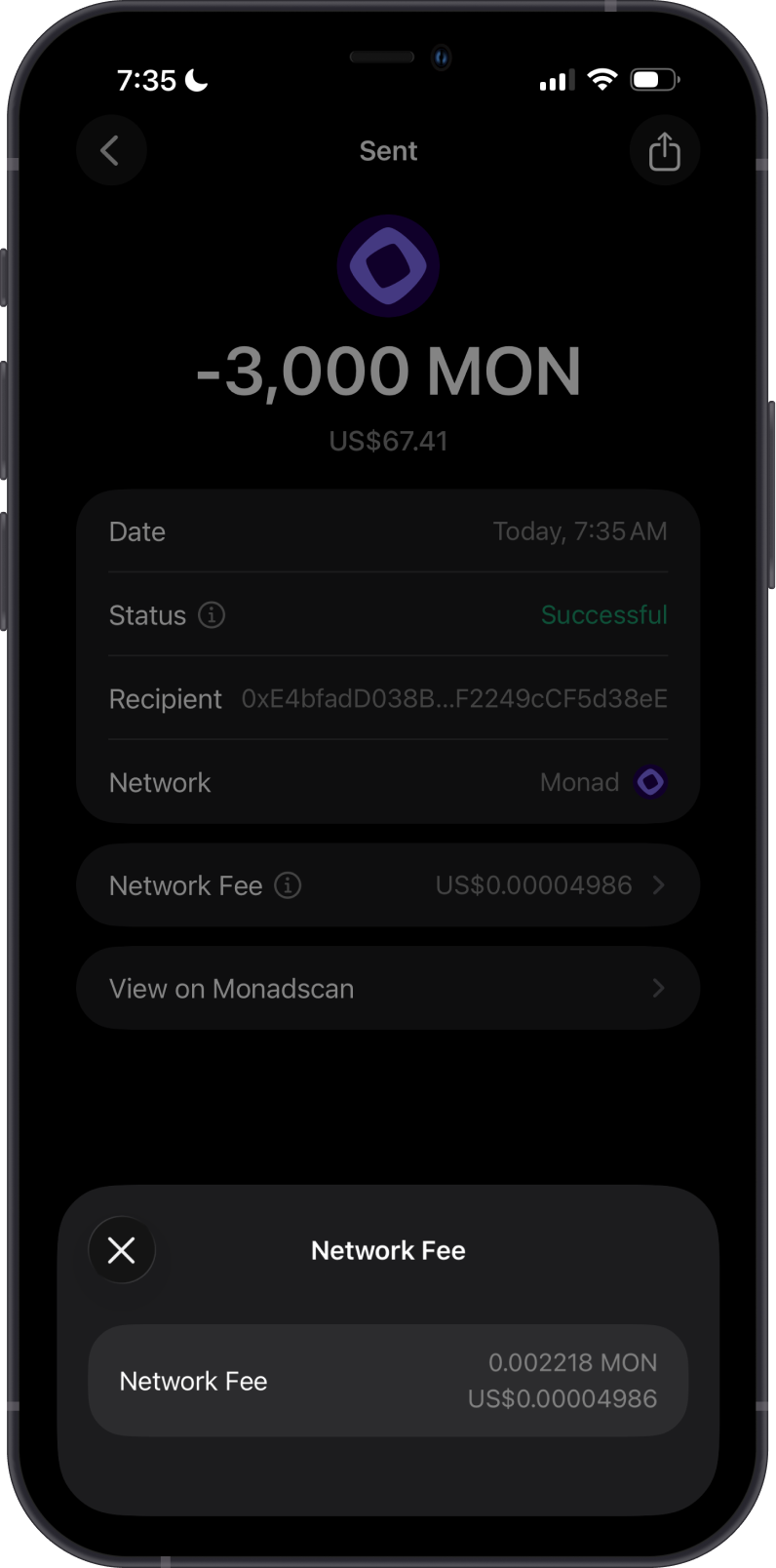
Monad transaction fees pay for the gas required to process a transaction. The total fee depends on the transaction's gas limit and selected gas price, so sending, swapping, staking, and token interactions can have different fees.
Tap Network Fee before confirming to choose an available fee option. A higher fee can improve the likelihood of prompt inclusion by validators, but it does not guarantee a specific confirmation time. Gem Wallet displays the total fee in MON before you send.
How to Check Monad Balance?
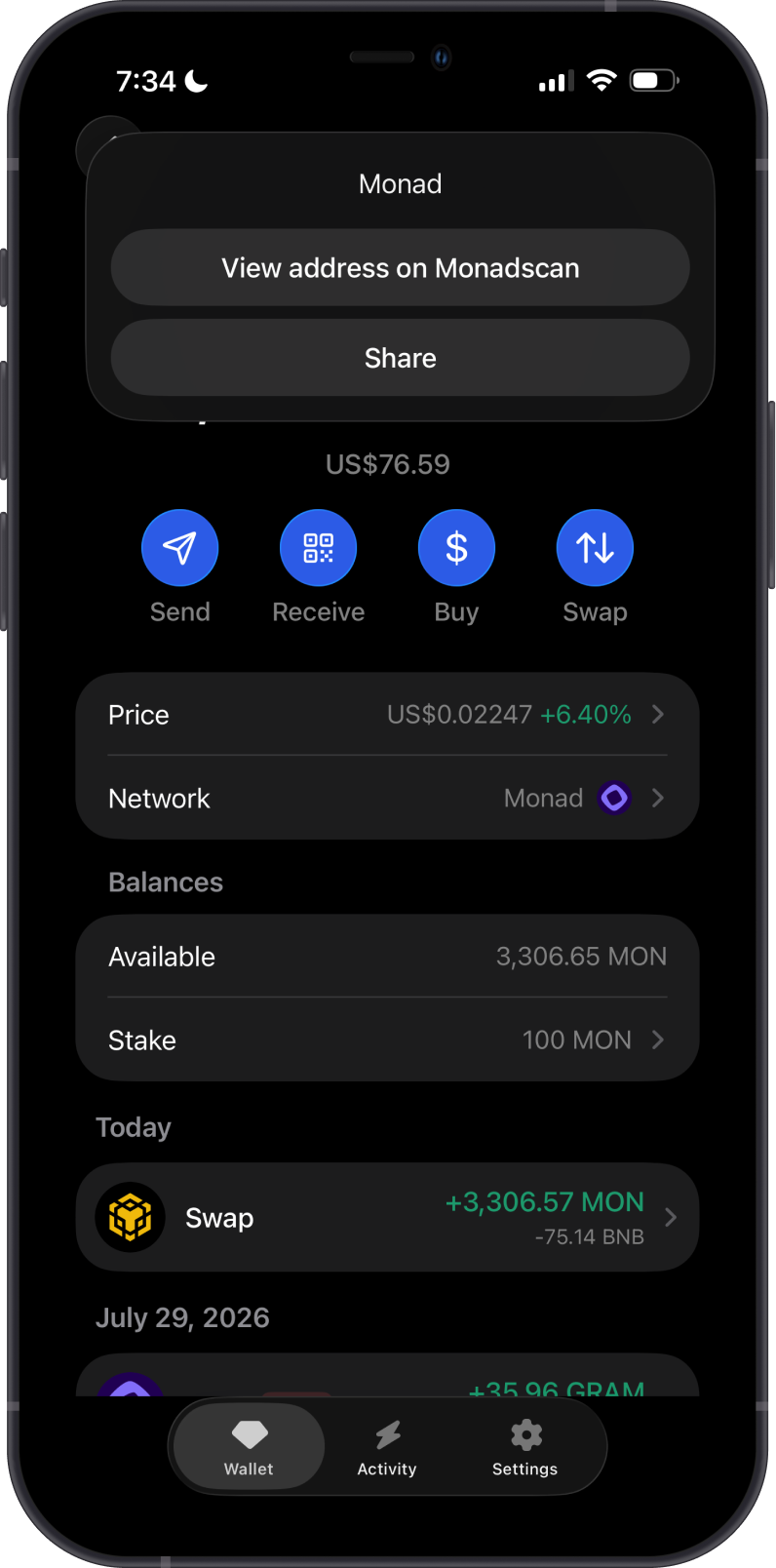
Gem Wallet connects to Monad to show your MON balance, supported token balances, staking positions, and transaction history. Tap the three-dot menu and select View address on Monadscan to inspect the address on the blockchain explorer.
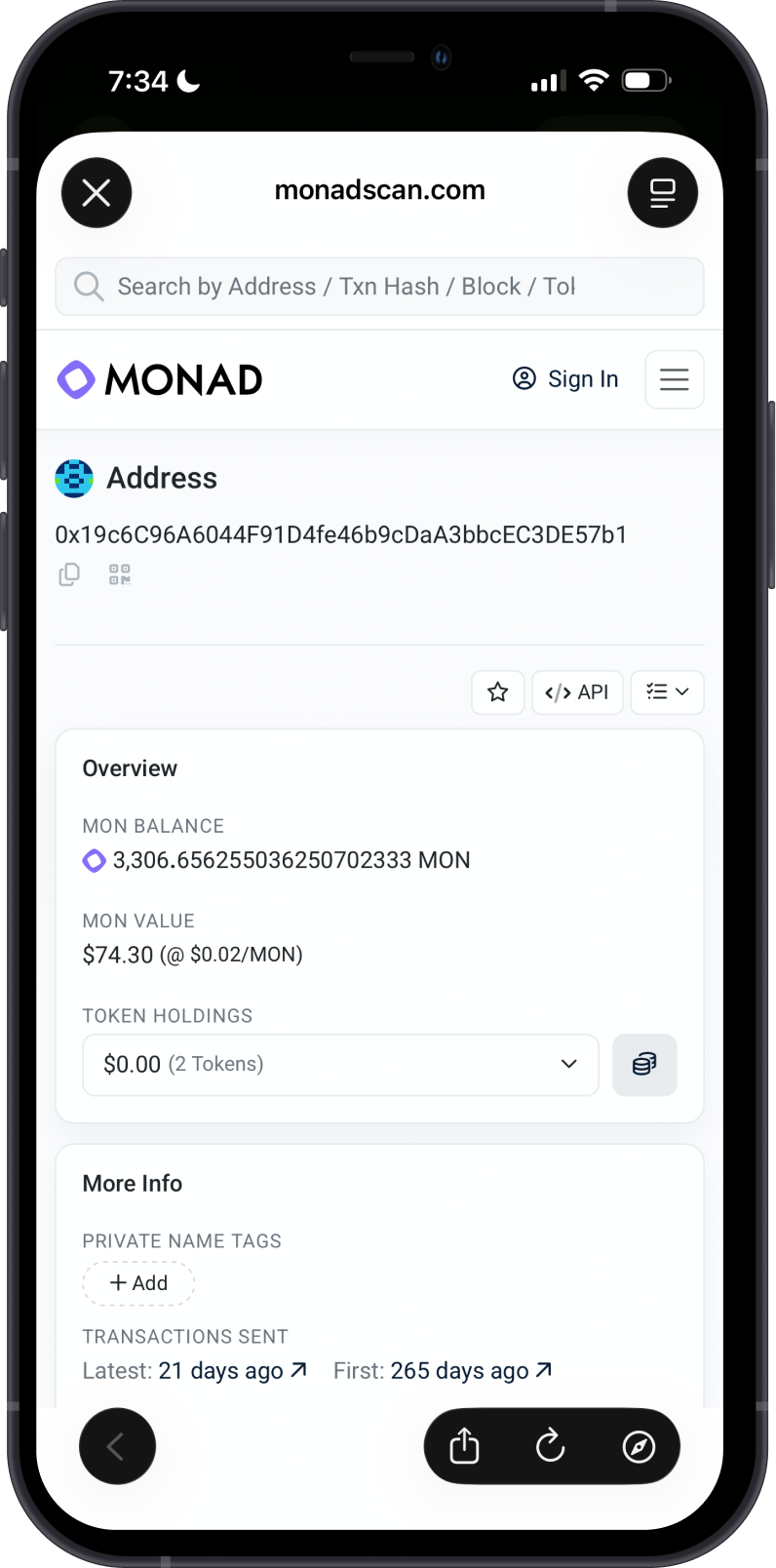
Monadscan is the default MON explorer in Gem Wallet. Search for a Monad address or transaction ID to review public balances, token holdings, transaction history, status, and fees.
You can also open a transaction from the Monad transaction history and select View on Monadscan for more detailed information.
Why Choose Gem Wallet for Monad?
- Self-Custody: You retain control of your MON, supported tokens, and private keys.
- Token Support: Add and manage supported Monad ERC-20 tokens in the same wallet.
- Built-In Staking: Delegate MON to a validator and manage your staking position in the wallet.
- Swap Support: Review available cross-chain and on-chain routes directly in the app.
Conclusion
Monad is an EVM-compatible Layer 1 network where MON is used for transaction fees and staking. Gem Wallet lets you buy, hold, send, receive, stake, swap, and explore MON and supported Monad tokens while retaining control of your private keys.