What are Token Approvals?
Token approvals allow users to grant permissions to smart contracts to spend a specified amount of their tokens on their behalf. This is a core feature of ERC20 and similar token standards. This mechanism enables decentralized applications (dApps) to interact with tokens securely and efficiently, allowing for functionalities like trading, lending, and staking.
Token Approvals are required in order to do on-chain swaps.
Why is it Important?
When approving tokens, users should be cautious about which contracts they grant permissions to. Malicious contracts can potentially drain the user's funds if given unrestricted access. Understanding the security implications helps users protect their assets by limiting approvals to trusted contracts and regularly reviewing and revoking unnecessary permissions.
You can use third-party tools like the Ethereum Token Approval Checker to revoke ERC-20 token approvals.
For a security-focused procedure, including how to verify the spender, confirm the revocation, and disconnect the related dApp, see How to Revoke a Suspicious Token Approval.
Before granting a new allowance, follow How to Review a Token Approval Transaction to check the token, spender, contract, amount, and warnings.
Approval Amounts?
Users can specify the exact amount of tokens they wish to approve for a contract to spend. This can be a fixed amount or an unlimited allowance. Users can manage their token allowances by increasing, decreasing, or revoking approvals through their wallet interfaces or dApps.
In the example below, only a specific amount of 50 USDT was approved for the swap rather than the entire balance of 131 USDT.
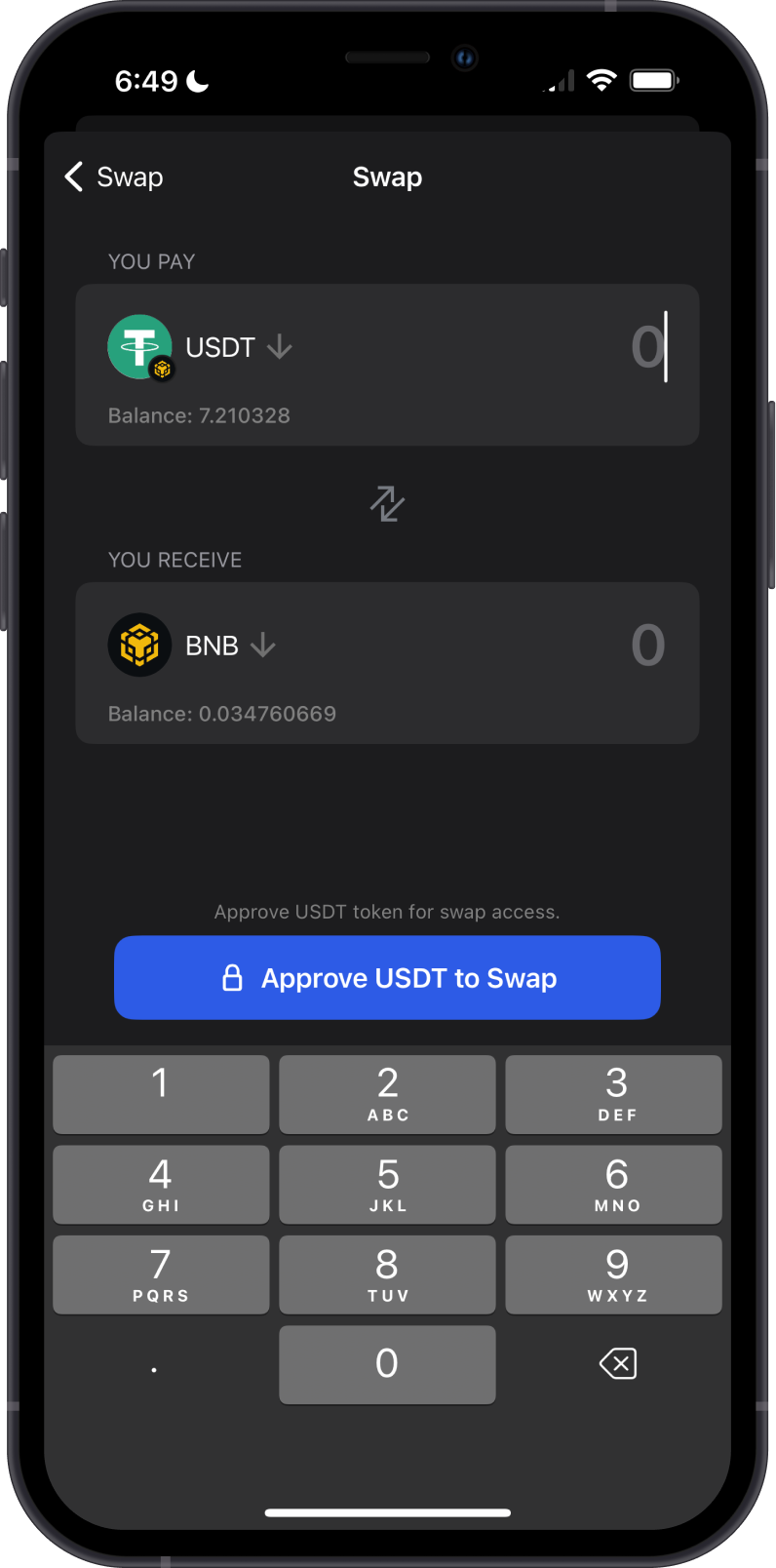
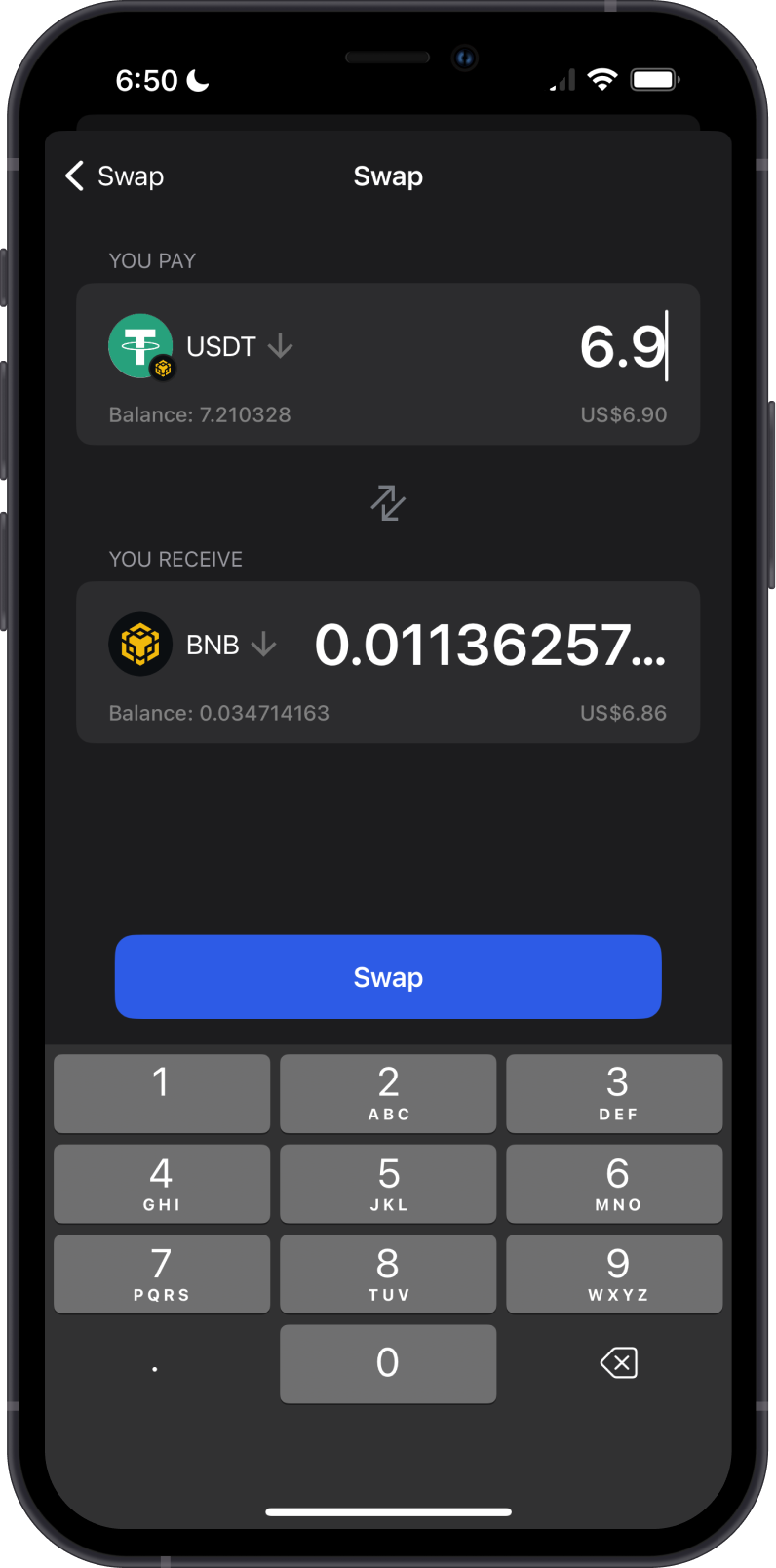
Review Permit Signing Requests
Some dApps request a signed Permit message instead of submitting a separate approval transaction first. Gem Wallet displays the token and approved amount at the top of supported Permit review screens. It can also show the requesting app, selected wallet, network, spender, expiration, and additional message details.
Before signing, verify:
- The token and amount match the action you initiated.
- The requesting app and domain are expected.
- The selected wallet and network are correct.
- The spender is associated with the intended protocol.
- The expiration is reasonable.
- No warning indicates unlimited access, an externally owned spender, or broader NFT permissions than intended.
A Permit signature can authorize token spending even though signing it does not itself require a network fee. Reject the request if any value is missing, unfamiliar, or larger than expected.
See Token Approval vs Permit Signature for a side-by-side explanation of on-chain approvals, Permit messages, fees, submission, and revocation.